This is the second in a regular series of short articles commemorating the 250th anniversary of American independence, tracing in words and pictures how Americans have fulfilled, and at times struggled to fulfill, the ideals of the Declaration of Independence. Make sure to read the first installment — Independence Forever.
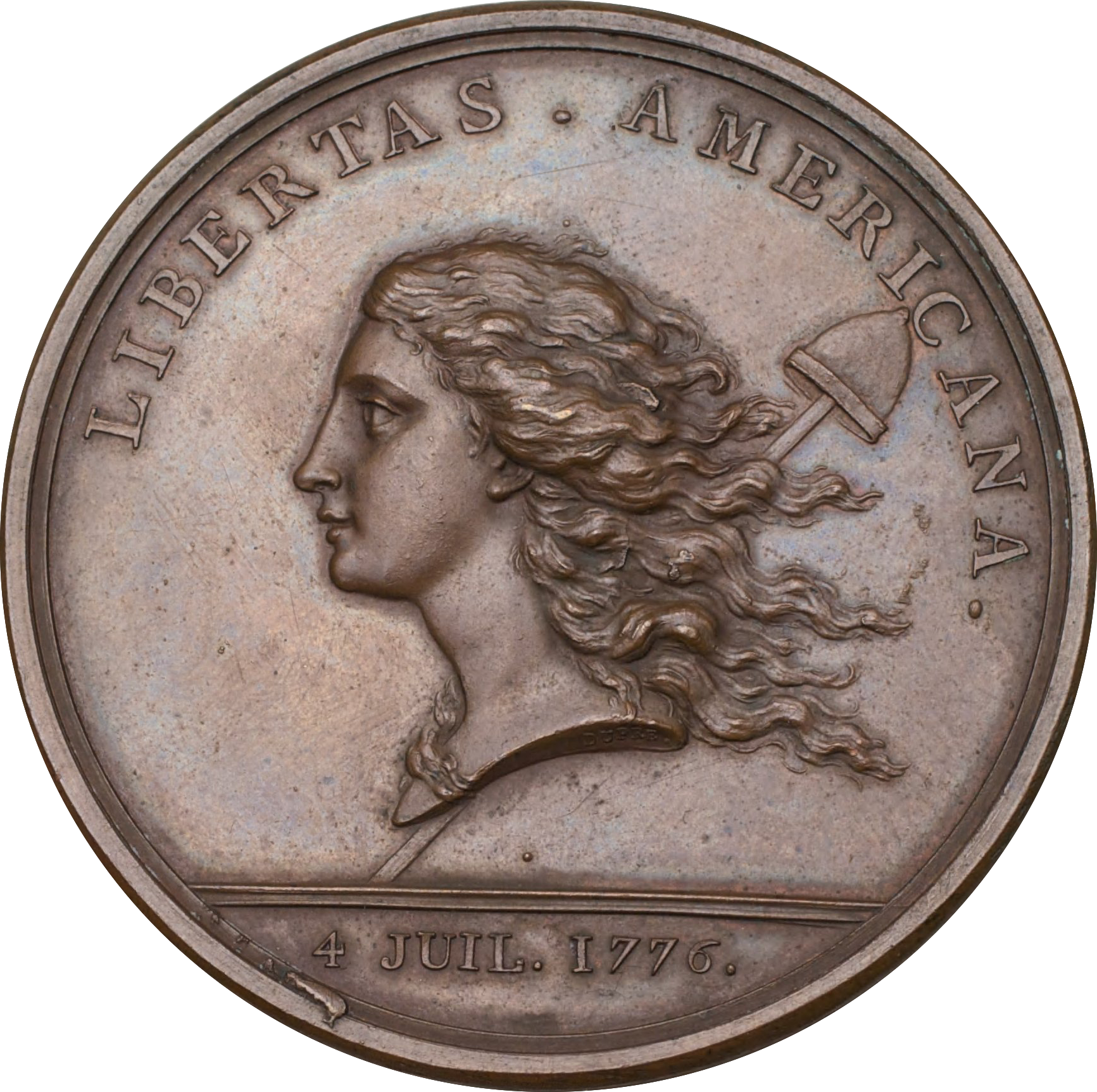
On July 2, 1776, the Continental Congress adopted a resolution introduced by Richard Henry Lee that “these united colonies are, and of right ought to be, free and independent states.” Two days later Congress adopted the Declaration of Independence, announcing this decision to the world. On that day – July 4, 1776 – the new nation was dedicated to ideals that have defined it, and us, for 250 years.
Americans had been fighting the British for more than a year, but until that day what they were fighting for had never been clear. Colonists began protesting increased imperial regulation and taxation in 1764, as the British ministry sought to bring order to the empire following victory in the French and Indian War. When protest turned to resistance the British sent troops to occupy Boston, where colonial resistance was particularly sharp. The occupation stoked resentment and led to violence. A customs officer killed a young boy and then a squad of the king’s soldiers killed the king’s subjects before the British withdrew the troops to a fort in the harbor.
Resentment simmered. The British ministry refused to repeal all the new taxes and regulations it had imposed or to acknowledge that the colonists had any right to representation in the government that imposed them. The colonists reasoned that an unlimited power to tax is the power to destroy and concluded that the king’s ministers intended to reduce them to abject obedience. The Bostonians threw a large shipment of tea into their harbor rather than pay taxes on it. The British then closed the port and sent an army to occupy the city, validating the colonists’ apprehensions.
Having made an example of Massachusetts British officials expected colonists elsewhere would be sufficiently intimidated to accept their authority. In this way, as in many others, they were deeply mistaken. Anxious colonists from Georgia to New Hampshire made the cause of Boston their own. They sent food and supplies to the beleaguered city and in August 1774 they sent delegates to meet in Philadelphia to discuss a common response to the latest British provocations.
There, in the First Continental Congress, leaders of the resistance who had known one another only by reputation met for the first time. Samuel Adams of Boston shook hands with Richard Henry Lee of Virginia, with whom he had been corresponding. They were all delighted to meet John Dickinson of Pennsylvania, whose eloquent attack on British taxation they had read. And they were all drawn to the last two delegates to arrive. They arrived together: Patrick Henry, already known as the greatest orator in America, and Colonel George Washington, who impressed everyone with his military bearing. Washington spoke privately to several delegates about preparing the colonies to defend themselves. John Adams told Henry he expected war. Henry nodded. “By God,” he said, “I am of your opinion.”
Congress sent an appeal to the king — a compromise for men like Samuel and John Adams, Henry, Washington, and Lee who were steeling themselves for war and ready to fight for independence, with those like Dickinson who hoped for reconciliation — and then adjourned. The king ignored the appeal, and thereafter it became very difficult to pretend that George III was a patriot king being misled by evil counselors. Attachment to the king was the last thread tying the colonies to the empire and by the beginning of 1775 it was strained to the breaking point.
On April 19 General Thomas Gage, commanding the British army in Boston, sent an expedition into the countryside to seize arms and ammunition. It came back bloodied by militiamen who had been pushed too far. The militia occupied the towns surrounding Boston and laid siege to the British army. Gage and the generals in his army — William Howe, John Burgoyne, and Henry Clinton, the three generals who would command the largest British armies in the war — thought a bayonet charge by disciplined regulars would disperse the rebels and make short work of their rebellion.
On June 17 they attacked the rebel works on a hill overlooking Boston Harbor. It took three bayonet charges to force the rebels to retreat a short distance, leaving a third of the British army dead or wounded on the hillside, including over one hundred officers. Clinton confided to his diary that a few more victories like the Battle of Bunker Hill would put an end to the British empire in America.
Two weeks later George Washington, having been appointed by Congress to lead an American army drawn from all thirteen colonies, took command outside Boston. Although no one could have seen it then, whatever hope the British had ever had of making short work of the rebellion evaporated at that moment.
Congress had chosen the perfect man for the task at hand. Washington was among the most experienced military officers in the colonies, but what set him apart from other men was his character. Thomas Jefferson, who knew Washington well, wrote that he “was incapable of fear, meeting personal dangers with the calmest unconcern.” He was also a prudent man who weighed decisions carefully and whose commitment to justice was utterly inflexible. He was, Jefferson wrote,
in every sense of the words, a wise, a good, & a great man . . . . his character was, in its mass perfect, in nothing bad, in few points indifferent; and it may truly be said that never did nature and fortune combine more perfectly to make a man great, and to place him in the same constellation with whatever worthies have merited from man an everlasting remembrance. . . . for his was the singular destiny & merit of leading the armies of his country succesfully thro’ an arduous war for the establishment of its independance, of conducting its councils thro’ the birth of a government, new in its forms and principles, until it had settled down into a quiet and orderly train, and of scrupulously obeying the laws, thro’ the whole of his career, civil and military, of which the history of the world furnishes no other example.
Jefferson wrote this long after Washington was dead, but the characteristics he describes were evident to others from the moment Washington took command. He would make mistakes but rarely the same mistake twice. He could be defeated on the battlefield — his enemies were always better trained and supplied. But he could not be beaten. He found a way around every obstacle in his path. His army rarely had enough of anything except courage, which Washington inspired in his men. Of all the Americans, famous or forgotten, whose energy and daring made us free, none did more than George Washington.
Washington’s army forced the British out of Boston in the spring of 1776 and for a few months the rebellious colonies were almost entirely free of British troops. During this interlude Congress took up Richard Henry Lee’s resolution on independence. Many delegates were unsure, but popular sentiment had shifted that spring in favor of separating from the British empire, inspired by a pamphlet called Common Sense written by Thomas Paine, an English immigrant only just arrived in Pennsylvania.
Paine wrote for ordinary people. He quoted the Bible, which every American read. And he mocked the British government — the king, his ministers, and his Parliament — without mercy. “Of more worth is one honest man to society, and in the sight of God, than all the crowned ruffians that ever lived.” Somewhere in our capital city this plain truth ought to be carved in marble or cast in bronze.
Paine called on Americans to recognize that the future of the world depended on their revolution. “The Sun never shined on a cause of greater worth,” he wrote. “‘Tis not the affair of a City, a County, a Province, or a Kingdom; but of a Continent . . . . Tis not the concern of a day, a year, or an age; posterity are virtually involved in the contest, and will be more or less affected even to the end of time, by the proceedings now.” The conclusion, he wrote, was inescapable: “Every thing that is right or reasonable pleads for separation. The blood of the slain, the weeping voice of nature cries, ‘TIS TIME TO PART.’”